Caffè Florian

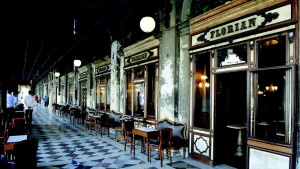
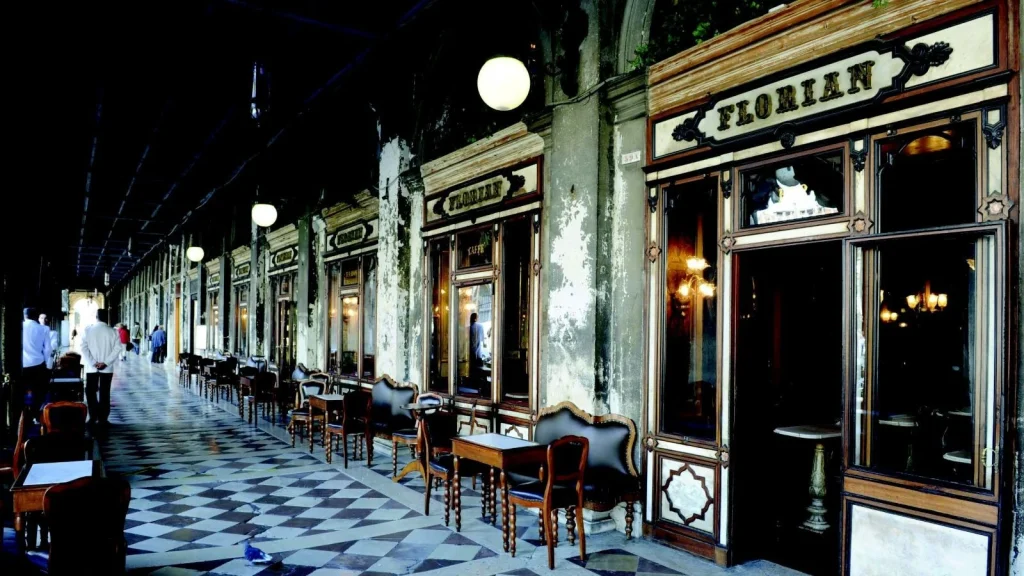
Opened on 29 December 1720, Caffè Florian is the oldest café in Italy and one of the oldest in the world. Located in the historic setting of the Biblioteca Marciana, it overlooks St Mark’s Square beneath the Procuratie Nuove, in a space where modern art and Neo-Baroque style coexist. The name Florian came into use shortly after the café opened, in reference to its founder, Floriano Francesconi, who had originally called it Alla Venezia Trionfante (To Triumphant Venice). The café has become a symbol of European coffeehouse culture: a place for conversation, intellectual exchange and social life, as well as somewhere to enjoy the pleasures of the table.

The Coffee House
It was here that Gasparo Gozzi, founder of the Gazzetta Veneta and the Osservatore Veneto in 1760, would sit with his notebook, jotting down ideas inspired by conversations at neighbouring tables. His brother Carlo, a playwright, often gathered with a group of combative supporters to argue against Carlo Goldoni, himself a regular at Florian. In Carlo Gozzi’s view, Goldoni had betrayed the spirit of the Commedia dell’Arte through his theatrical reforms. Instead of its familiar stock characters – Harlequin, Colombina and Pantalone – Goldoni introduced characters drawn from everyday life, helping to lay the foundations of modern theatre.
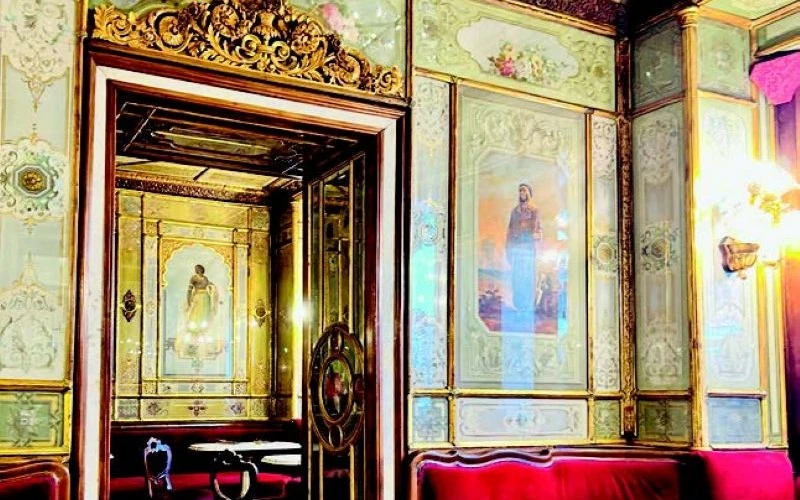
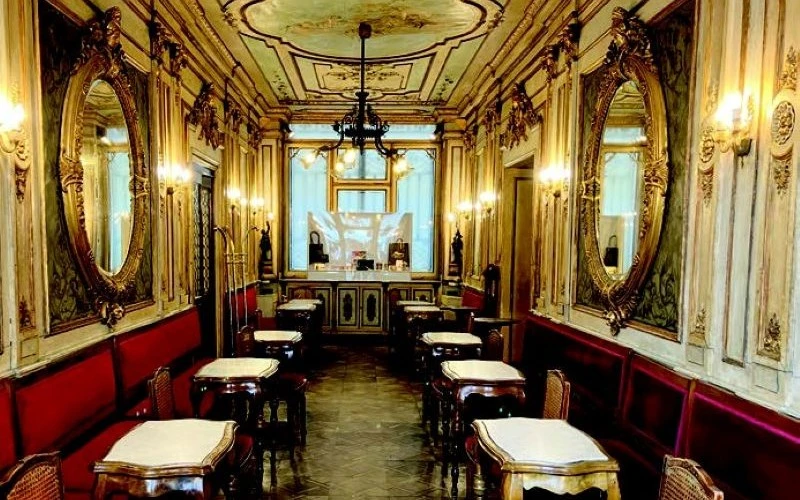
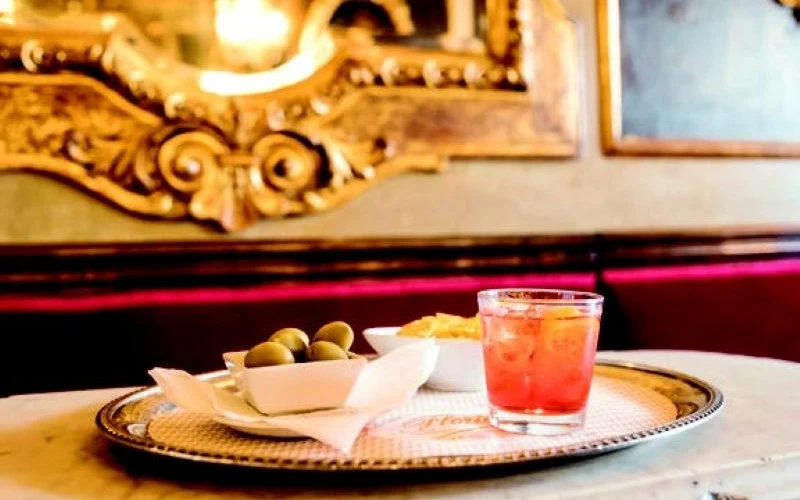
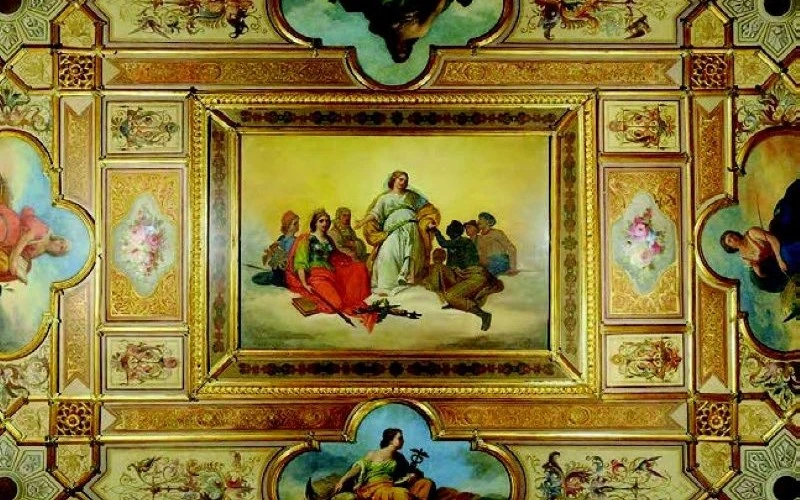
Florian itself inspired one of Goldoni’s theatrical masterpieces, La bottega del caffè (The Coffee House), a work that captures this pivotal moment in literary history. Many other figures with a particular affection for Venice have passed through Florian’s doors, including Lord Byron, Casanova, Goethe and Rousseau, followed in more recent times by Charlie Chaplin, Gabriele d’Annunzio and Ernest Hemingway. Visiting the café today feels like stepping back in time. Its distinctive revolving Carrara marble tables, frescoed walls and gold-leaf mirrors evoke the splendour of a bygone era. Concerts are held during the warmer months, while visitors wishing to take home a memento can purchase objects specially created for Florian by contemporary artists.
Contemporary tastes and pleasures
Everything on the menu bears the Florian signature, from sweet and savoury café specialities, ice creams and semifreddi to cocktails, including a selection of house creations, and a full restaurant offering. Gluten-free options are also available. The café’s product collections are divided into Gourmet, Lifestyle and Design, while service remains faithful to tradition: waiters in livery still serve guests from silver trays. From breakfast to an Intermezzo, Florian’s name for a light lunch, from an international brunch to an afternoon break or an aperitif, the menu offers traditional dishes and lighter preparations alongside options suited to international tastes. It is an approach befitting a place that has welcomed people from across the world for more than three centuries.

Piazza San Marco, 57 – Venice, Italy
Tel. +39 041 5205641 – servizi@caffeflorian.com
www.caffeflorian.com

Facebook
Telegram
WhatsApp
Email
Picture of Cinquesensi

Cinquesensi

Cinquesensi Editore explores the connection between culture, art and taste through editorial projects that interpret the contemporary world from an original perspective. With the volume "A Tavola con l’Arte. Italia", it investigates the dialogue between fine dining, cultural venues and the new patronage of wine, creating a journey through territories, wineries, museums and places of hospitality.

A journey through Italy celebrating beauty and taste. Ilaria Guidantoni and Antonio Paolini have mapped more than 300 extraordinary destinations across all 20 Italian regions, from major cities to the most hidden villages, following three different paths: “Cuisine in Places of Art”, where museums and historic villas open their doors to dining; “Art at the Table”, featuring trattorias and restaurants that have embraced the language of art in both their cuisine and interiors; and “Art in the Glass”, exploring wineries designed by leading architects and vineyards in dialogue with art installations. A practical, richly illustrated guide for those who seek out and appreciate the many expressions of Italian creativity and style.

Horti

In the heart of Pavia, overlooking the banks of the Ticino River, lies Horti, an urban and human regeneration project inaugurated in 2022. Created by Almo Collegio Borromeo, the project has given the city a 35,000-square-metre green space that once contained vegetable gardens and orchards used to feed the College’s

Refettorio Majer

A sponsor of art exhibitions, Majer is a bakery and patisserie brand with ten outlets deeply rooted in their respective Venetian sestieri, whose names they bear, and two dining venues: Giudecca and Il Refettorio. Majer has long been a familiar name in Venice for its pastries, traditional biscuits and whole-bean

Masseria Amastuola

The white of stone gleaming in the southern light, the green of the garden vineyard where vines grow on trellises between dry-stone walls alongside 1,500 olive trees, the blue of the sky and sea in the distance: Masseria Amastuola stands on a plateau 210 metres above sea level in the

Marchesi Antinori

To call it a winery is a useful simplification, one that identifies its primary purpose, yet in reality its role extends into other realms, both in terms of winemaking and in the symbolic expression of a genius loci shaped over more than six centuries of family and Florentine history.

Subida Sirk

The Subida Sirk encompasses Trattoria al Cacciatore, which has held a Michelin star since 2007, retained in the 2026 edition, Osteria La Preda de La Subida, serving traditional everyday dishes, and a resort set within the hamlet.

Cantina Tramin

Designed by architect Werner Tscholl, the winery takes its inspiration from the vine and its forms. Its striking green structure blends into the surrounding landscape, and the connection goes well beyond aesthetics. Designed with energy efficiency in mind, the building combines wood, iron, glass and concrete, with spaces carefully arranged

Caffè Florian

Opened on 29 December 1720, Caffè Florian is the oldest café in Italy and one of the oldest in the world. Located in the historic setting of the Biblioteca Marciana, it overlooks St Mark’s Square beneath the Procuratie Nuove, in a space where modern art and Neo-Baroque style coexist. The

Canale dei Mulini

Along the Canale dei Mulini, from Castel Bolognese to Alfonsine, a cycling and walking route winds through nature and history, leading to the Mulino Scodellino, also known as the Countess’s Mill. Today, this historic mill produces flour in compliance with production and distribution standards and hosts a rich programme of

Lisca.10

Kitchen, home and workshop. Everything revolves around taste and art. This is the distinctive concept chosen by Lisca.10, a recent and highly intriguing addition to Abruzzo’s fine-dining scene. Stepping inside offers a double sensory immersion.